If you are weighing an address with more space, more privacy, and more polish, you have likely considered Cherry Hills Village and Greenwood Village. The price tags can be eye‑opening, and it is fair to ask whether the premium still holds up. You want a home that fits your lifestyle and protects your investment over time. In this guide, you will see what drives value in these enclaves, how the markets behave, the tradeoffs compared to nearby suburbs, and a clear process to decide if the premium makes sense for you. Let’s dive in.
What the premium really buys
Cherry Hills Village and Greenwood Village are not simply higher-priced versions of south‑metro suburbs. Their premiums are tied to specific traits that are hard to replicate.
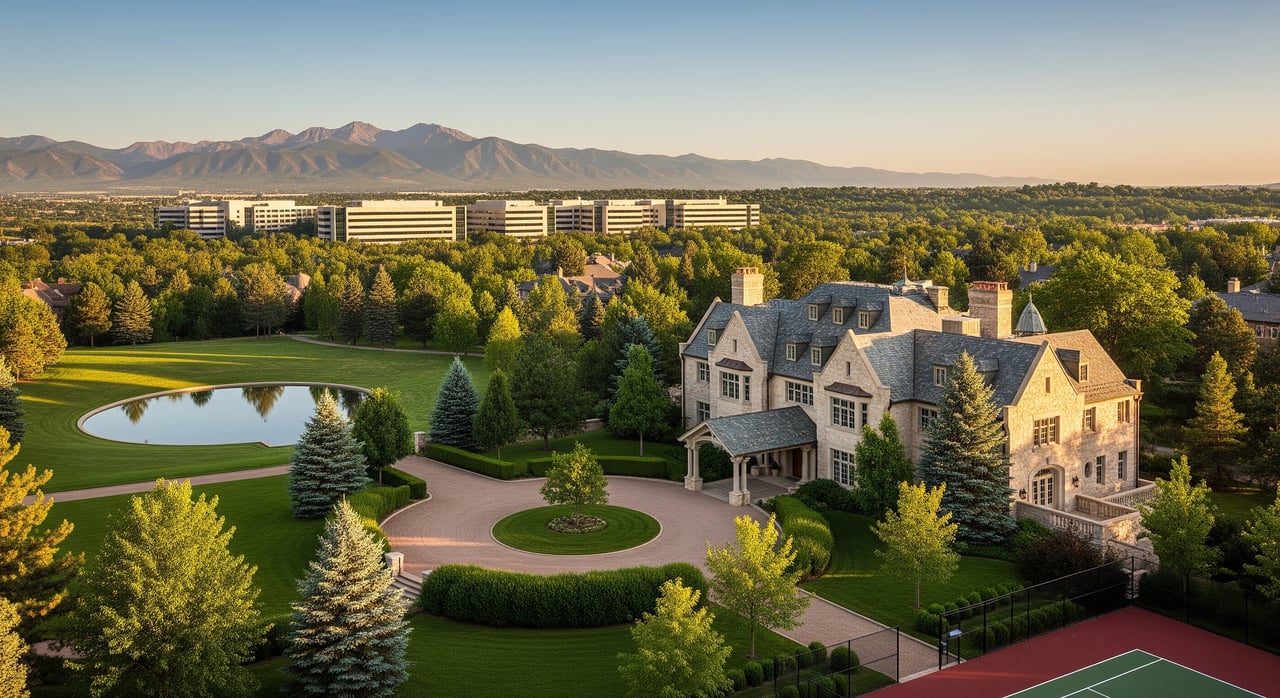
- Lot size and zoning. Cherry Hills Village is known for large estate parcels and strict land use that limits densification. Greenwood Village offers upscale neighborhoods with larger lots than many suburbs, plus select gated enclaves. That lot-based scarcity underpins long‑term value.
- Privacy and setting. Mature trees, generous setbacks, and limited commercial intrusion in Cherry Hills create quiet streets and private yards. Greenwood Village blends established neighborhoods with a refined suburban feel near major employment hubs.
- Schools and boundaries. Many addresses in these areas fall within Cherry Creek School District boundaries. For many buyers, verified school assignment is a core part of value.
- Lifestyle and clubs. Private clubs and nearby amenities add social and recreational depth. Cherry Hills Country Club is a marquee example that anchors community identity. Greenwood Village and the Inverness area provide access to corporate fitness facilities and other private offerings.
- Proximity and access. Greenwood Village borders the Denver Tech Center, which shortens commutes for many executives and offers stronger transit options. Cherry Hills positions you closer to central Denver and Cherry Creek retail while maintaining a quiet, residential character.
How Cherry Hills and Greenwood Village differ
These two markets often get grouped together, but they behave differently.
- Cherry Hills Village. Expect a higher price tier anchored by estate-scale lots, equestrian-friendly areas in select pockets, and very limited new supply. The city’s restrictive zoning preserves character and supports scarcity.
- Greenwood Village. Generally priced above many south‑metro suburbs but typically below Cherry Hills on a per‑home basis. The value story leans on neighborhood quality, a mix of larger lots in certain enclaves, and adjacency to the Denver Tech Center. Greenwood Village has more potential for infill and redevelopment than Cherry Hills, so its premium can be more sensitive to cycles.
Market dynamics to watch
In these enclaves, the numbers behind supply and demand tell you how durable the premium is.
- Months of supply. Lower months of supply signal scarcity and stronger pricing power. Track this trend over the last 12 to 24 months to see seasonality and momentum.
- Days on market and list-to-sale ratio. Estate segments behave differently than entry-level markets. Compare the median days on market and the percentage of list price achieved across price bands, especially above 2 to 3 million dollars.
- Transaction counts. Small sample sizes are common. A handful of ultra‑luxury closings can skew medians in any given month. Use rolling 12‑month figures to smooth volatility.
- New construction share. Cherry Hills has very limited new inventory, which supports resale values. Greenwood Village sees periodic infill and luxury redevelopment that refresh supply and can influence pricing.
Comparing to other south‑metro suburbs
When you ask if the premium is worth it, you are often comparing to Centennial, Littleton, Highlands Ranch, Lone Tree, Parker, Castle Pines, or Castle Rock. Those areas can deliver newer construction, planned amenities, and price efficiency. What you trade away are the very drivers that define Cherry Hills and Greenwood Village: lot size, zoning protection, privacy, and adjacency to elite clubs or the DTC corridor.
A practical way to frame the premium is to calculate the percentage premium: (Median price in target area minus median price in comparator) divided by the comparator’s median, then multiply by 100. You can also compare price per finished square foot and price per lot acre to isolate what portion of the price is tied to land.
When the premium makes sense
The premium often pencils out for certain buyer profiles.
- Estate seekers. If you want an acre-plus lot, room for a pool or guesthouse, and mature landscaping, Cherry Hills is difficult to substitute. Select Greenwood Village enclaves also meet this need.
- School-focused buyers. If verified school boundaries are central to your decision, map the exact address assignment and weigh how that aligns with your goals.
- Executives and founders. If you value short DTC commutes, client entertaining, and social networks anchored by private clubs, Greenwood Village often delivers a strong lifestyle fit. Cherry Hills offers similar access to central Denver and Cherry Creek retail.
- Long-hold buyers. If you plan to hold for a decade or more, land-based scarcity and stable neighborhood character can support value preservation.
Risks, tradeoffs, and opportunity cost
The same traits that support the premium come with considerations you should weigh.
- Carrying costs. Larger parcels and amenities can mean higher property taxes, insurance, landscaping, and maintenance. Private club dues are another ongoing line item if you choose to join.
- Liquidity. Ultra‑luxury estates can take longer to sell, especially in shifting rate environments. Build in a longer runway if you know you will need to exit on a schedule.
- Market cyclicality. Small sample sizes and macro shocks can create short‑term volatility. Look at multi‑year trends rather than single-month headlines.
- Remote work dynamics. If remote or hybrid schedules reduce commute sensitivity, some buyers may favor outer suburbs with more house for the money. Conversely, buyers who maintain office presence can value DTC proximity even more.
- Redevelopment pressure. Greenwood Village has a greater path for new luxury product than Cherry Hills. That can be a positive for neighborhood refresh, but it also means your competitive set evolves.
A simple data checklist to test the premium
Ask your broker to run these side-by-side numbers for Cherry Hills Village, Greenwood Village, and your top two comparators.
- Rolling 12‑month median sale price and price per finished square foot.
- Price per lot acre and distribution of lot sizes by bucket.
- Active listings, new listings, pendings, and months of supply by price band.
- Median days on market and list-to-sale ratio for 1 to 3 million dollars and above 3 million dollars.
- Share of cash deals versus financed purchases.
- One‑, three‑, and five‑year appreciation trends, with notes on composition shifts.
These metrics separate lifestyle preference from market reality so you can quantify what you are paying for.
What you get for the same budget elsewhere
Here is how the tradeoff often shows up at the property level.
- In Cherry Hills Village. A larger parcel with mature trees, greater privacy, and a quiet residential setting. You may prioritize architecture and room to add amenities over sheer interior square footage.
- In Greenwood Village. A luxury home near the DTC with refined streetscapes and select larger lots. You gain commute convenience and access to transit and corporate campuses.
- In a south‑metro comparator. More recent construction or additional interior square footage at a lower price point, often on smaller lots with closer neighbors and a more typical suburban layout.
Neither path is right or wrong. It comes down to which mix of land, location, and lifestyle matters most to you.
Buying strategies in these enclaves
Winning in a premium market takes planning.
- Get clear on non‑negotiables. Define your minimum lot size, lifestyle needs, and school boundary requirements before you tour.
- Use price per acre to set value guards. In estate segments, land value is the anchor. Price per acre comparisons keep you from overpaying for structure alone.
- Prepare for limited selection. Scarcity means fewer listings. Be ready to act and consider pre‑market opportunities.
- Inspect for long‑term costs. Landscaping systems, pools, roofs, and outbuildings can carry higher maintenance. Build realistic annual budgets.
- Think like a seller today. Even if you plan a long hold, design choices and updates that align with market taste help preserve liquidity later.
Selling strategies that protect your premium
Achieving a top‑of‑market result requires equal parts presentation and precision.
- Lead with land. Showcase lot size, privacy, and outdoor living as headline features in photos, video, and copy.
- Stage with intent. Estate homes can feel overwhelming if empty. Strategic staging helps buyers understand scale and flow.
- Calibrate pricing to the segment. Use rolling medians and price per acre, and account for small sample sizes by leaning on comp quality over comp count.
- Pre‑market to the right audience. Targeted broker outreach and private showings can surface serious buyers faster in low‑inventory segments.
- Control the narrative. Provide a clear upgrades list, maintenance history, and any club or amenity context that supports lifestyle value.
The bottom line
Cherry Hills Village generally commands one of the highest premiums in metro Denver because of large lots, strict land use, and an estate identity that is difficult to replicate. Greenwood Village typically prices above many south‑metro suburbs, supported by neighborhood quality and DTC proximity, though it is often more sensitive to economic cycles than Cherry Hills. Whether either premium makes sense for you comes down to your priorities. If land, privacy, school boundaries, and club‑anchored lifestyle sit at the top of your list, the premium can be well justified. If price efficiency, lower carrying costs, or a shorter hold are the drivers, nearby suburbs may offer a better value equation.
If you want a data‑driven read on today’s numbers and private opportunities not yet in the public eye, let’s talk. As a senior, design‑forward team with deep roots in these corridors, we help buyers and sellers make clear decisions and capture top‑of‑market outcomes.
Ready to evaluate your options with precision and privacy? Connect with Helm Weaver Helm to book an appointment.
FAQs
What makes Cherry Hills Village command a higher premium?
- Large estate lots, strict land use that limits new supply, and a quiet residential setting create land-based scarcity that supports higher pricing.
How does Greenwood Village’s value compare to nearby suburbs?
- It typically prices above many south‑metro suburbs due to neighborhood quality and proximity to the Denver Tech Center, while usually sitting below Cherry Hills on a per‑home basis.
Are school boundaries a major factor in these markets?
- Yes. Many addresses fall within Cherry Creek School District boundaries, so verified school assignment is a key part of value for many buyers.
How should I measure the premium versus Centennial or Highlands Ranch?
- Compare rolling 12‑month median price, price per square foot, price per lot acre, months of supply, and days on market, then calculate the percent premium between areas.
Do these enclaves have more or less new construction?
- Cherry Hills has very limited new supply due to zoning and lot preservation. Greenwood Village sees periodic infill and luxury redevelopment in select neighborhoods.
What are the main risks of buying an ultra‑luxury estate here?
- Higher carrying costs, potential for longer days on market at resale, and short‑term price swings from small sample sizes are the primary considerations.
How does remote work affect the value story in Greenwood Village?
- Hybrid schedules can reduce commute sensitivity for some buyers, but DTC adjacency remains a strong draw for those with regular office or client commitments.