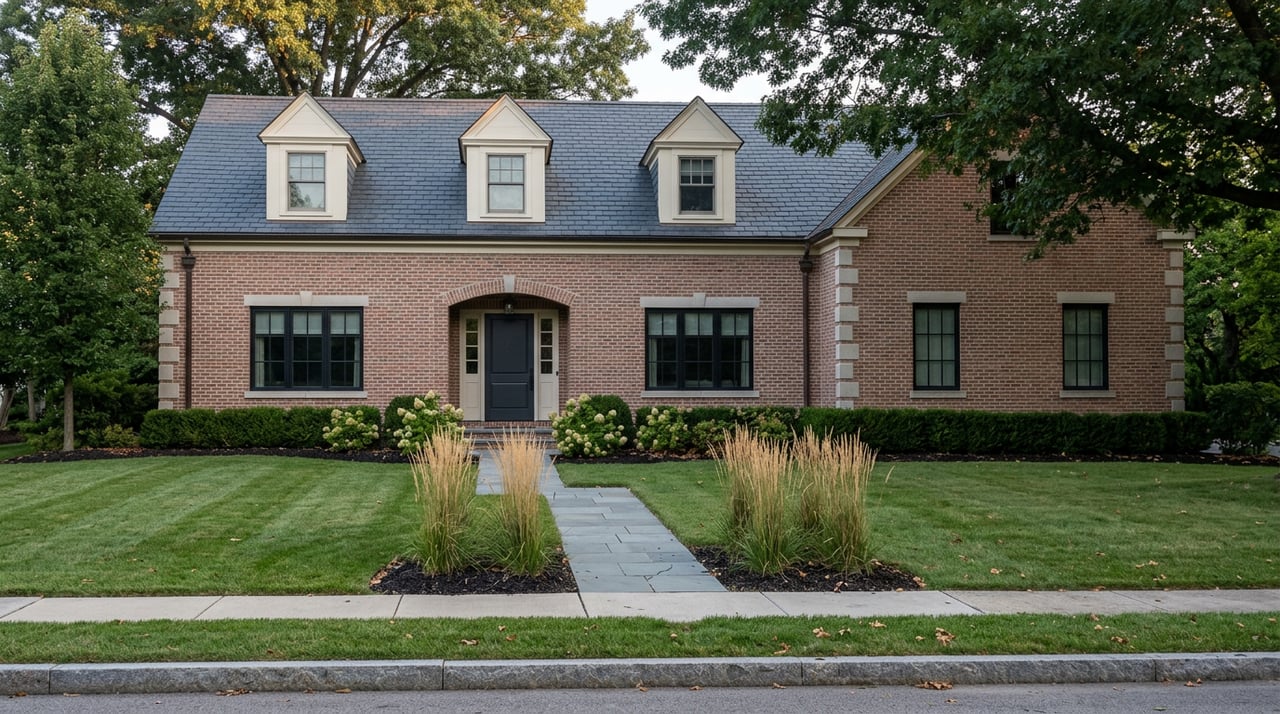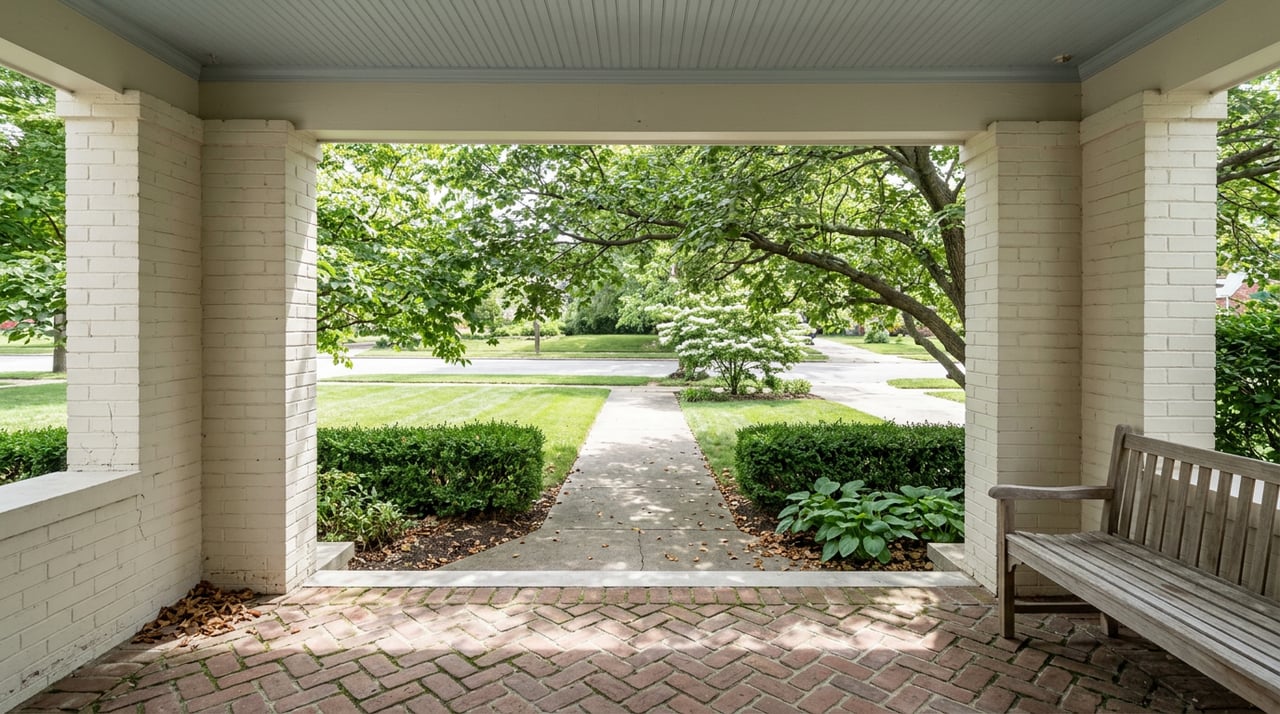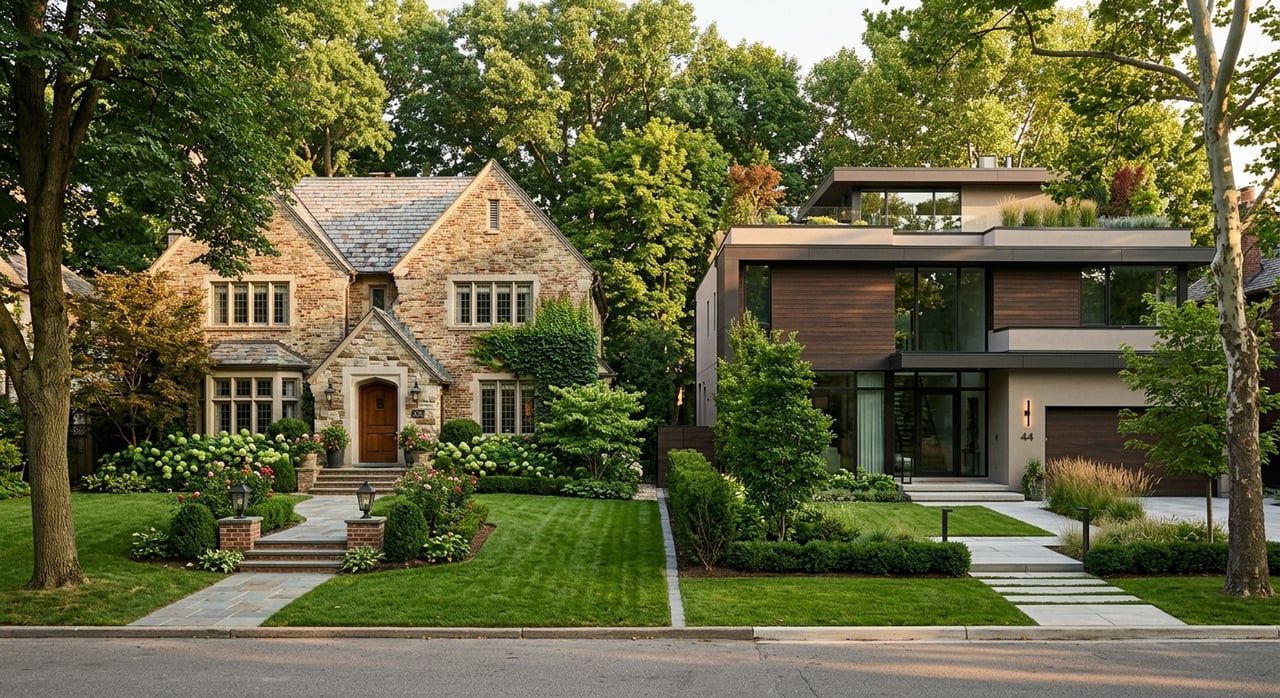
Curious why one Hilltop house gets lovingly renovated while another disappears behind a fence and returns as a brand-new build? If you are buying, selling, or simply watching the neighborhood change, it can be hard to tell what is driving all that activity. This guide will help you understand why scrapes happen in Hilltop and Crestmoor, what Denver’s process looks like, and what new construction tends to offer so you can make smarter real estate decisions. Let’s dive in.
Why scrapes happen here
In Hilltop and Crestmoor, the story usually starts with the lot. These neighborhoods have many larger parcels, including sites around 9,000 square feet and examples in Crestmoor at roughly 9,920, 10,018, 12,000, and even 15,000 square feet. When a lot is large and well located, the land itself can carry enormous value.
That matters because some older homes sit on parcels that may be worth more than the structure standing on them. In nearby east Denver examples, owners have chosen demolition after deciding repair costs were too high. Builders active in Hilltop and Crestmoor have also said nearly every house they build there is priced above $4 million, which helps explain why teardown economics can make sense in certain cases.
This does not mean every older home is a scrape candidate. It means buyers, sellers, and builders are often weighing the same basic question: does the existing house still match the value and potential of the site? In Hilltop and Crestmoor, the answer is sometimes no.
Hilltop and Crestmoor pricing context
Hilltop and Crestmoor both sit in premium price ranges, but the details matter. As of March 31, 2026, Zillow reported Hilltop’s average home value at about $1.497 million, with 29 homes for sale and a median list price of $2.125 million. Realtor.com reported a $2.30 million median listing price in Hilltop, 42 homes for sale, a 46-day median time on market, and a 99% sale-to-list ratio.
Crestmoor shows a broad premium spread rather than one narrow price point. Current examples in the research range from about $1.54 million for a 1952 ranch on a 12,000-square-foot lot to about $1.98 million for a 1938 Colonial Revival on a 9,920-square-foot lot. A 2018 new home facing Crestmoor Park was listed around $3.68 million on a 10,018-square-foot lot.
That range helps explain why buyers can see very different outcomes on similar-sized sites. One property may trade for lot value plus renovation upside. Another may command a much higher number because the home is newer, larger, and built for current luxury expectations.
What a “scrape” means in Denver
A scrape is not just a casual real estate term. In Denver, a total demolition of a structure larger than 200 square feet requires a permit. That makes teardown activity part of a formal city review process, not simply a private construction decision.
Denver also requires adjacent property owners to be notified at least 10 business days before permit issuance. Typical approvals take about 50 to 60 days. If a total demolition is required, the demolition permit must be issued before the residential construction permit.
There is another layer as well. Denver says Landmark Preservation staff review all demolition applications citywide, and a certificate of demolition eligibility can create a five-year window for a later demolition application. For buyers and sellers, that means redevelopment timing can be more involved than it first appears.
Denver’s rules focus on context
One of the biggest misconceptions about new construction is that builders can simply maximize size and ignore the block around them. Denver’s planning framework does not work that way. Blueprint Denver and the zoning code use neighborhood contexts to reflect building placement, height, block patterns, land uses, and transportation options.
In plain English, the city expects a rebuild to respond to its surroundings. The goal is not only what fits on the lot, but also what fits the street. That is especially important in established neighborhoods where mature trees, setbacks, and long-standing patterns shape the look and feel of each block.
This is also why two lots with similar dimensions may not lead to identical outcomes. Context, zoning, design review, and the specifics of the parcel all matter. If you are evaluating a scrape or a future build site, broad assumptions can be expensive.
How Park Hill differs from Hilltop and Crestmoor
Hilltop, Crestmoor, and Park Hill are often mentioned together because they are geographically close, but they do not behave exactly the same way. Park Hill is generally more mixed and lower priced overall. Redfin showed a March 2026 median sale price of $705,000, with 23 days on market and a 100% sale-to-list ratio.
The planning direction is also more explicit in Park Hill. Denver’s East Area Plan calls for preserving existing homes and requiring complementary design of new housing in South Park Hill. Related city planning work for Park Hill also focuses on safe access to the park, affordable housing, mitigating involuntary displacement, tree canopy, healthy food access, and support for small businesses.
That does not mean Hilltop and Crestmoor lack design standards. It does mean you should be careful about assuming the same redevelopment story applies across all east Denver neighborhoods. Similar geography does not always mean similar planning priorities or pricing dynamics.
What new construction usually offers
In Hilltop and Crestmoor, new construction often solves the compromises that come with older floor plans. Buyers are usually getting more efficient square footage, newer systems, and modern luxury features that are difficult or costly to add through renovation. That is a major reason new builds continue to attract attention.
The feature mix can vary a lot. In one Hilltop West example, planned homes ranged from about 2,700 to 3,400 square feet and included elevators, rooftop decks, and underground parking, with larger units expected to list around $2.1 million. In Crestmoor, a 2018 park-facing home offered 6,749 square feet plus a folding glass wall, outdoor fireplace, wine room, dog wash station, and a deck facing the park.
So no, a new build here does not always mean the same kind of house. Some projects are relatively compact by luxury standards. Others are large custom homes designed to fully leverage a premium site.
Character concerns are really design concerns
When people talk about neighborhood character, they are often reacting to scale, placement, and visual balance more than the age of the house itself. Denver’s planning language supports context-sensitive design, and the East Area Plan says new housing should complement existing architectural history in the east area. That puts the focus on fit, not just freshness.
In practice, many buyers respond well to infill that respects setbacks, works with the block, and preserves a sense of openness. On the other hand, homes that feel dominated by mass or garage presence often draw more skepticism. The best way to evaluate a new build is to look beyond the headline features and ask how the home sits on its site.
For sellers, this matters too. A dated home on a strong lot may still attract serious interest if the parcel, orientation, and block context support future value. For buyers, it means a beautiful house should be judged both as a standalone product and as part of the streetscape around it.
What buyers should watch closely
If you are shopping Hilltop or Crestmoor, it helps to know whether you are buying a finished luxury product, a renovation candidate, or land value with upside. Those are very different purchases, even if they share a similar address or lot size.
Focus on a few practical questions:
- Is the value mainly in the house, the lot, or both?
- Has demolition already been approved, or would a future owner need to start that process?
- How does the home’s scale compare with others on the block?
- Does the property offer newer features that are expensive to recreate later?
- If the house is older, are repair costs likely to compete with redevelopment economics?
These questions can quickly clarify whether a property is priced as a home to enjoy, a home to update, or a site to transform.
What sellers should understand before listing
If you own an older property in Hilltop or Crestmoor, your buyer pool may be broader than you think. Some buyers want a classic home they can improve over time. Others are specifically looking for a large parcel where a future rebuild could make sense.
That is why presentation and positioning matter. A home with architectural charm, a functional footprint, and strong lot dimensions may appeal to very different buyers depending on how it is marketed. In premium neighborhoods, the right pricing and story can influence whether your property is seen as a teardown, a renovation opportunity, or a move-in-ready home with long-term upside.
This is also where design-aware marketing becomes important. In a neighborhood where land, architecture, and future potential all carry weight, your listing strategy should capture more than bedroom count and square footage. It should clearly frame what makes the property valuable now and what may make it valuable next.
If you are weighing a purchase, planning a sale, or trying to understand redevelopment potential in Hilltop or Crestmoor, partner-level local guidance can make the process far clearer. The team at Helm Weaver Helm brings senior-led insight, design-forward positioning, and hands-on support for luxury buyers and sellers across Denver’s premium neighborhoods.
FAQs
What does a scrape mean in Hilltop or Crestmoor real estate?
- In Hilltop or Crestmoor, a scrape usually means a home is demolished so the lot can be redeveloped, and in Denver a total demolition over 200 square feet requires a formal permit process.
Why do older homes get torn down in Hilltop and Crestmoor?
- Older homes in Hilltop and Crestmoor are sometimes torn down because large lots can be extremely valuable and repair costs on dated houses may not make economic sense compared with redevelopment.
Are all new builds in Hilltop and Crestmoor very large homes?
- No. Research examples show some new projects in the mid-2,000 to mid-3,000 square foot range, while other newer homes in Crestmoor are much larger and exceed 6,700 square feet.
Does Denver review demolition and rebuild plans in these neighborhoods?
- Yes. Denver requires demolition permits for total demolition of structures over 200 square feet, notifies adjacent owners before issuance, and reviews demolition applications citywide through Landmark Preservation staff.
How is Park Hill different from Hilltop and Crestmoor for redevelopment?
- Park Hill is generally lower priced overall and Denver’s planning documents there place clear emphasis on preserving existing homes and requiring complementary new design in parts of the area.
What should buyers evaluate when considering a scrape or new build in Hilltop or Crestmoor?
- Buyers should look at whether the value is in the house or the lot, what permit steps may still be needed, how the home fits the block, and whether renovation costs could compete with redevelopment value.